 ROS Index

Repository Summary
| Description | |
| Checkout URI | https://github.com/grupo-avispa/depth_anything_v2_ros2.git |
| VCS Type | git |
| VCS Version | main |
| Last Updated | 2026-07-27 |
| Dev Status | UNKNOWN |
| Released | UNRELEASED |
| Contributing |
Help Wanted (-)
Good First Issues (-) Pull Requests to Review (-) |
Packages
| Name | Version |
|---|---|
| depth_anything_v2_ros2 | 1.1.0 |
README
depth_anything_v2_ros2



Overview
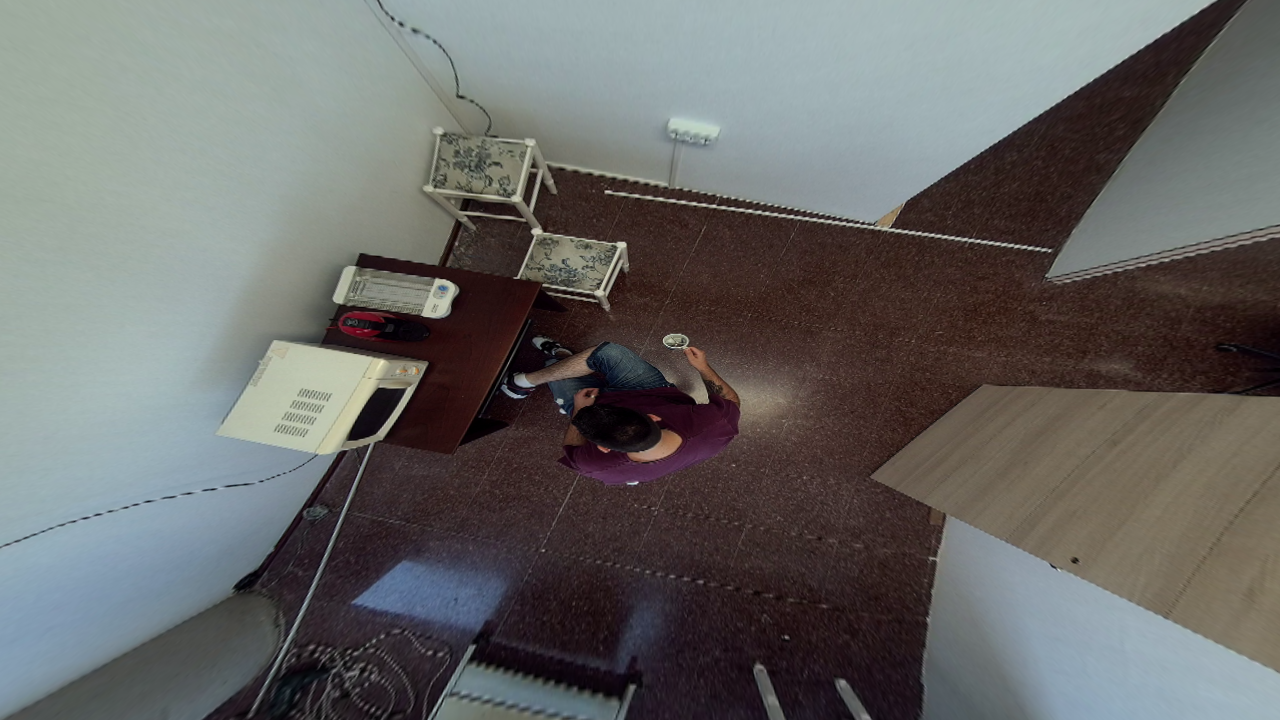
This package is a ROS2 wrapper for the depth_anything_v2 library. It provides a ROS2 node that subscribes to a camera topic and publishes the depth map of the scene.
| RGB | Depth |
|---|---|
 |
 |
The depth_anything_v2_ros2 package has been tested under [ROS2] jazzy on [Ubuntu] 22.04. This is research code, expect that it changes often and any fitness for a particular purpose is disclaimed.
Installation
Building from Source
Dependencies
- Robot Operating System (ROS) 2 (middleware for robotics),
- depth_anything_v2 (library for depth estimation),
- torch (deep learning framework),
- nav2_common (used by the launch file to rewrite the parameters YAML).
torch, torchvision, opencv-python and numpy are installed via pip (see Building); the rest are regular ROS 2 dependencies resolved by rosdep.
Building
To build from source, clone the latest version from the main repository into your colcon workspace and install the python dependencies by running the following commands:
cd colcon_workspace/src
git clone --recurse-submodules https://github.com/grupo-avispa/depth_anything_v2_ros2.git -b main
pip3 install -r requirements.txt
Before building, make sure to download the depth_anything_v2 model weights and place them in the models directory.
[!IMPORTANT] This node uses the metric depth model (
depth_anything_v2.metric_depth), so you must download a metric checkpoint, not a relative one. A relative checkpoint loaded into the metric architecture produces mis-scaled, non-metric depth (objects appear too far away and bounding boxes become oversized). For indoor scenes use the Hypersim model; for outdoor scenes use the VKITTI model.
You can download the metric checkpoints here. For example, the indoor (Hypersim) small model:
cd colcon_workspace/src/depth_anything_v2_ros2/models
wget https://huggingface.co/depth-anything/Depth-Anything-V2-Metric-Hypersim-Small/resolve/main/depth_anything_v2_metric_hypersim_vits.pth
Remember to set max_depth to the value the checkpoint was trained with (20 m for Hypersim/indoor, 80 m for VKITTI/outdoor).
Then, install the ROS2 dependencies using rosdep and build the package using:
cd colcon_workspace
rosdep install -i --from-path src --rosdistro jazzy -y
colcon build --symlink-install
Updating the depth_anything_v2 submodule
The depth_anything_v2 submodule is pinned to a fixed commit (there are no upstream tags/releases to pin to instead), so git submodule update always checks out that exact commit and builds stay reproducible. To deliberately move to a newer upstream commit:
cd colcon_workspace/src/depth_anything_v2_ros2/depth_anything_v2
git fetch
git checkout <new-commit-sha>
cd ..
git add depth_anything_v2
git commit -m "build: update depth_anything_v2 submodule to <new-commit-sha>"
Rebuild and re-run the test suite afterwards, since upstream changes to dpt.py or the dinov2 backbone can break the DepthEstimator import.
Usage
With some RGB image source running, run the depth_anything_v2_ros2 node with:
ros2 launch depth_anything_v2_ros2 default.launch.py
depth_anything is a managed (lifecycle) node. With the default autostart:=true launch argument it configures (loads the model) and activates (creates the topics) itself on startup. To drive it manually instead, launch with autostart:=false and use:
ros2 lifecycle set /depth_anything configure
ros2 lifecycle set /depth_anything activate
A failed configure (e.g. an invalid encoder or a missing model_file) is reported as a clean lifecycle transition failure instead of crashing the process.
Nodes
depth_anything
This is a managed (lifecycle) node. It subscribes to a camera topic and publishes the depth map of the scene, alongside the matching CameraInfo so downstream nodes (e.g. depth_image_proc for point clouds) can pair both topics.
Subscribed Topics
-
camera/color/image_raw([sensor_msgs/Image])The RGB image topic.
-
camera/color/camera_info([sensor_msgs/CameraInfo])Camera info matching
image_topic, republished alongside the depth image.
Published Topics
-
depth([sensor_msgs/Image])
File truncated at 100 lines see the full file
CONTRIBUTING
Repository Summary
| Description | |
| Checkout URI | https://github.com/grupo-avispa/depth_anything_v2_ros2.git |
| VCS Type | git |
| VCS Version | main |
| Last Updated | 2026-07-27 |
| Dev Status | UNKNOWN |
| Released | UNRELEASED |
| Contributing |
Help Wanted (-)
Good First Issues (-) Pull Requests to Review (-) |
Packages
| Name | Version |
|---|---|
| depth_anything_v2_ros2 | 1.1.0 |
README
depth_anything_v2_ros2
Overview
This package is a ROS2 wrapper for the depth_anything_v2 library. It provides a ROS2 node that subscribes to a camera topic and publishes the depth map of the scene.
| RGB | Depth |
|---|---|
|
|
The depth_anything_v2_ros2 package has been tested under [ROS2] jazzy on [Ubuntu] 22.04. This is research code, expect that it changes often and any fitness for a particular purpose is disclaimed.
Installation
Building from Source
Dependencies
- Robot Operating System (ROS) 2 (middleware for robotics),
- depth_anything_v2 (library for depth estimation),
- torch (deep learning framework),
- nav2_common (used by the launch file to rewrite the parameters YAML).
torch, torchvision, opencv-python and numpy are installed via pip (see Building); the rest are regular ROS 2 dependencies resolved by rosdep.
Building
To build from source, clone the latest version from the main repository into your colcon workspace and install the python dependencies by running the following commands:
cd colcon_workspace/src
git clone --recurse-submodules https://github.com/grupo-avispa/depth_anything_v2_ros2.git -b main
pip3 install -r requirements.txt
Before building, make sure to download the depth_anything_v2 model weights and place them in the models directory.
[!IMPORTANT] This node uses the metric depth model (
depth_anything_v2.metric_depth), so you must download a metric checkpoint, not a relative one. A relative checkpoint loaded into the metric architecture produces mis-scaled, non-metric depth (objects appear too far away and bounding boxes become oversized). For indoor scenes use the Hypersim model; for outdoor scenes use the VKITTI model.
You can download the metric checkpoints here. For example, the indoor (Hypersim) small model:
cd colcon_workspace/src/depth_anything_v2_ros2/models
wget https://huggingface.co/depth-anything/Depth-Anything-V2-Metric-Hypersim-Small/resolve/main/depth_anything_v2_metric_hypersim_vits.pth
Remember to set max_depth to the value the checkpoint was trained with (20 m for Hypersim/indoor, 80 m for VKITTI/outdoor).
Then, install the ROS2 dependencies using rosdep and build the package using:
cd colcon_workspace
rosdep install -i --from-path src --rosdistro jazzy -y
colcon build --symlink-install
Updating the depth_anything_v2 submodule
The depth_anything_v2 submodule is pinned to a fixed commit (there are no upstream tags/releases to pin to instead), so git submodule update always checks out that exact commit and builds stay reproducible. To deliberately move to a newer upstream commit:
cd colcon_workspace/src/depth_anything_v2_ros2/depth_anything_v2
git fetch
git checkout <new-commit-sha>
cd ..
git add depth_anything_v2
git commit -m "build: update depth_anything_v2 submodule to <new-commit-sha>"
Rebuild and re-run the test suite afterwards, since upstream changes to dpt.py or the dinov2 backbone can break the DepthEstimator import.
Usage
With some RGB image source running, run the depth_anything_v2_ros2 node with:
ros2 launch depth_anything_v2_ros2 default.launch.py
depth_anything is a managed (lifecycle) node. With the default autostart:=true launch argument it configures (loads the model) and activates (creates the topics) itself on startup. To drive it manually instead, launch with autostart:=false and use:
ros2 lifecycle set /depth_anything configure
ros2 lifecycle set /depth_anything activate
A failed configure (e.g. an invalid encoder or a missing model_file) is reported as a clean lifecycle transition failure instead of crashing the process.
Nodes
depth_anything
This is a managed (lifecycle) node. It subscribes to a camera topic and publishes the depth map of the scene, alongside the matching CameraInfo so downstream nodes (e.g. depth_image_proc for point clouds) can pair both topics.
Subscribed Topics
-
camera/color/image_raw([sensor_msgs/Image])The RGB image topic.
-
camera/color/camera_info([sensor_msgs/CameraInfo])Camera info matching
image_topic, republished alongside the depth image.
Published Topics
-
depth([sensor_msgs/Image])
File truncated at 100 lines see the full file